

This homemade chicken stock is rich and layered with so much flavor. I’ve provided instructions on how to make it on the stovetop, in an Instant Pot, or in a slow cooker, so choose whichever method is easiest for you.
⭐️⭐️⭐️⭐️⭐️
“This is my second time making this and it is phenomenal stock!” -Tiffany, FoodieCrush reader
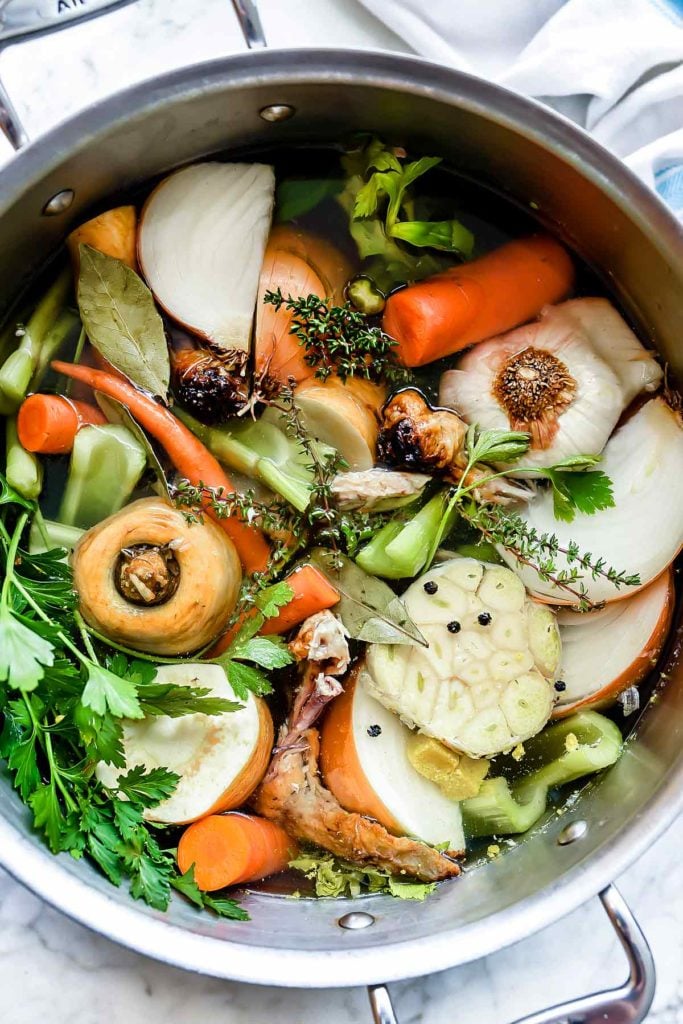
Making Your Own Chicken Stock Adds So Much Flavor to Your Cooking

Just about every cook knows to keep at least one carton of chicken stock on hand. It’s a reliable pantry staple that many of us use on a weekly basis in everything from soups to gravies to pastas.
While store-bought stock works fine in recipes that don’t call for much, no one can deny there’s nothing like homemade chicken stock for adding the ultimate flavor.
There’s just a certain kind of magic that happens when water, chicken, veggies, and aromatics mingle together in a stockpot, simmering away for hours. The water gets richly infused with fat and flavor, transforming into a savory, golden elixir.
So if you find yourself with some leftover chicken bones from last night’s dinner and a little hands-off cooking time on your side, make this homemade chicken stock recipe (future you will be grateful you did).
Enjoy!

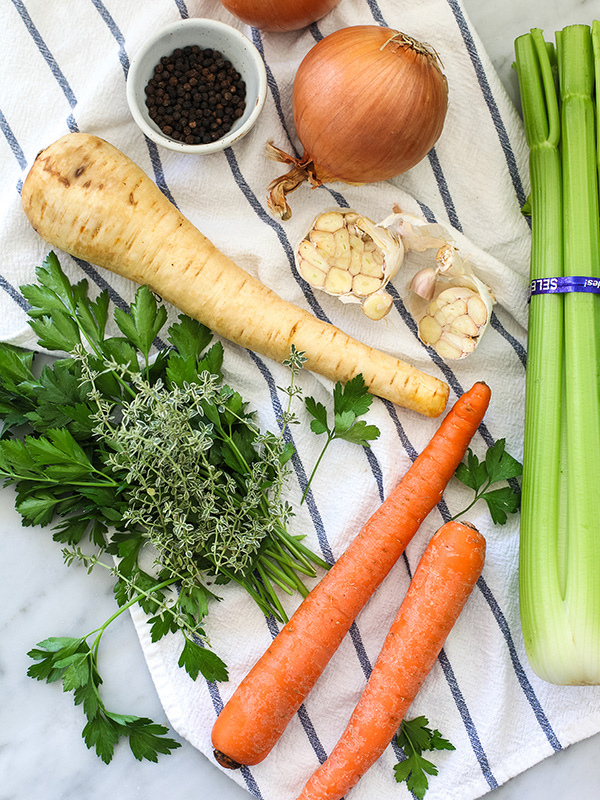
Here’s What Goes Into Chicken Stock
The full recipe, with amounts, can be found in the recipe card below.
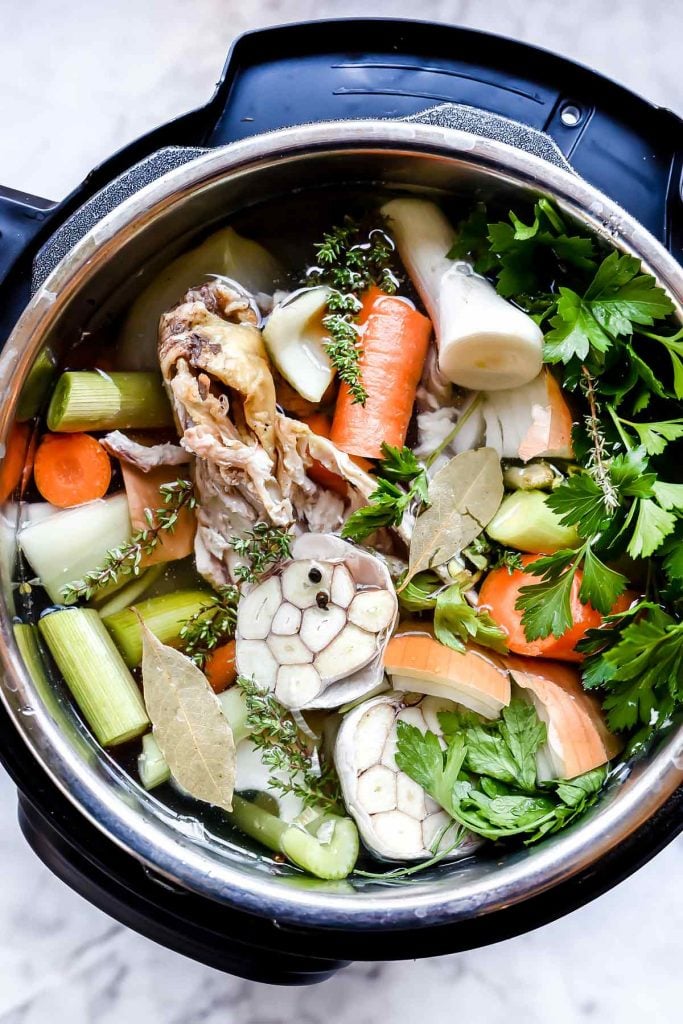
- Roast chicken carcass — From a 5-6 pound roasted chicken, or bones from 2 bone-in chicken breasts, 2 bone-in chicken thighs, and 2 chicken wings.
- Vegetables — Avoid adding starchy or cruciferous veggies to your chicken stock. Instead, stick with vegetables like carrots (no need to peel!), celery, onion or leeks, and parsnips (the secret ingredient that makes this particular chicken stock SO good).
- A whole head of garlic cut in half — Infuses the stock with lots of savory flavor.
- Herbs — Bay leaves, fresh Italian parsley, and fresh thyme give the stock tons of flavor. You can use the stems as well as the leaves.
- Chicken bouillon — My secret ingredient is adding 3 chicken bouillon cubes for a bit of extra chicken-y-ness.
- Black peppercorns — Use 6-8 peppercorns. If you add too many (or use ground pepper) the stock will be too spicy.
- Kosher salt — Seasoning the broth with kosher salt is important as that is what provides the pronunciation of its flavor.
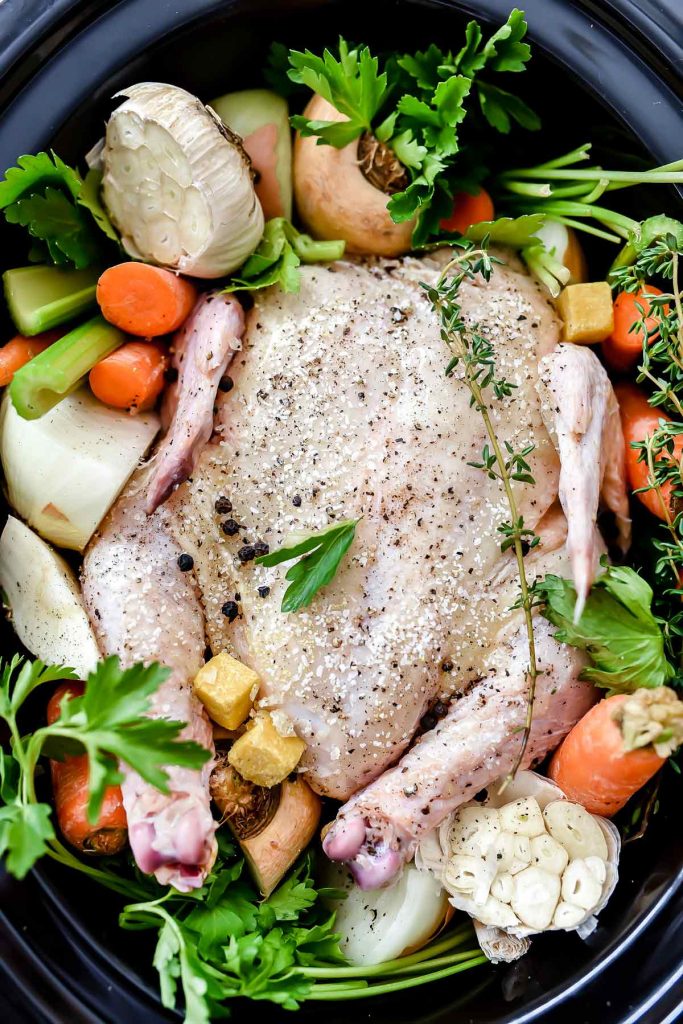
How to Make Chicken Stock From Bones
- Roast your bird. The best time to make chicken stock is after you’ve roasted a chicken or purchased a rotisserie bird from the store. After removing the meat, you’ll want to save the carcass for your stock. Don’t worry about stripping the bones clean — those extra nuggets of leftover meat and connector stuff add flavor. Ideally, the bones or carcass from 5-6 pounds of chicken works fine.
- Wrangle up the supporting cast. Vegetables and aromatics are two important flavor building blocks for your stock. Bonus? There’s no need to even peel them! Just cut it in half and toss it in, papery skins and all. Cut the larger vegetables into large pieces before adding them to the pot.
- Simmer down. Add all of your ingredients and water to a large stock pot and bring to a boil, then reduce to a gently rolling simmer for at least 1 ½ hours up to 3 hours. The chicken stock will reduce quicker if you simmer it uncovered, but I like to cover my pot 80% of the way with a lid so the liquid doesn’t evaporate so fast.
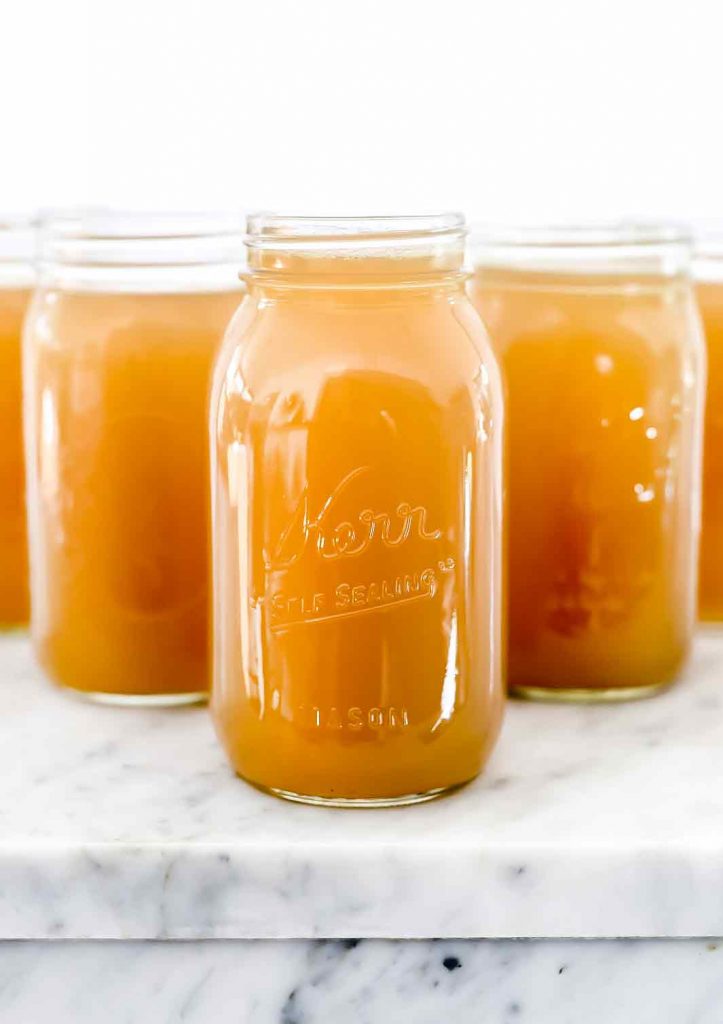
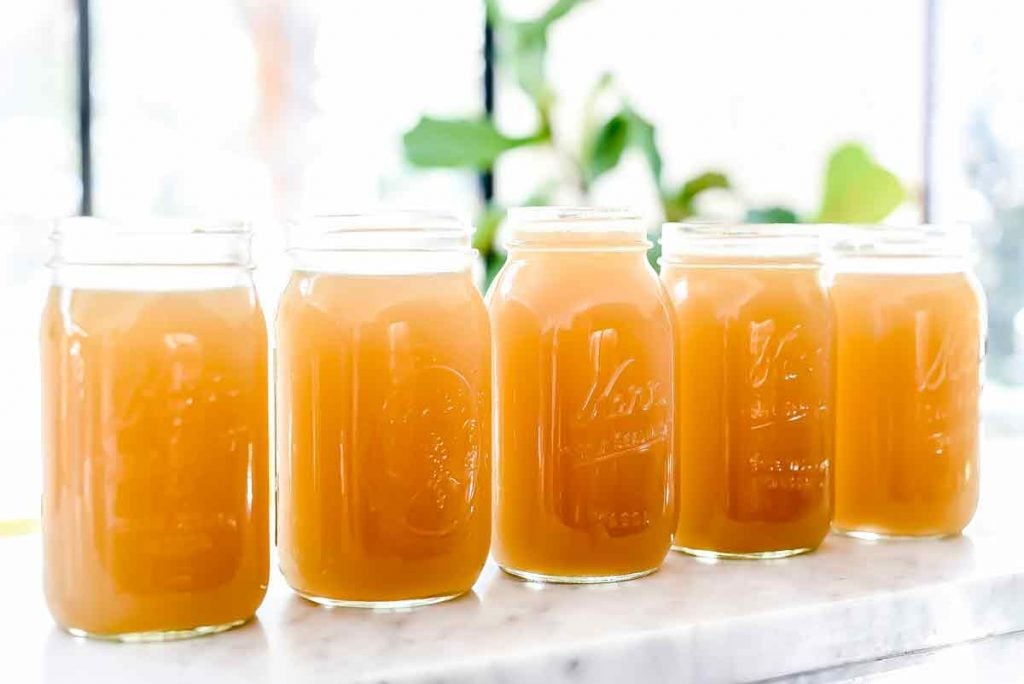
- Strain and discard. Place a large colander over a Pyrex 4-cup glass measuring cup or a large bowl and slowly drain the stock from the rest of the aromatics. The colander will catch any veggies or bones that may fall from the pot. Next, use a fine-mesh sieve and strain the stock into your next recipe’s soup stockpot. Or, if storing to use later, strain into 1-quart glass canning jars and cool before adding a tight-fitting lid (these are my favorite).
Heidi’s Tip: This recipe is just as easily made in a slow cooker or Instant Pot. To cook in either appliance, start with these steps for the stovetop and get the specific cooking instructions in the recipe box below.
Heidi’s Tips for Recipe Success
My secret flavor weapon. My husband started adding two chicken bouillon cubes to the stock for a head start on the chicken flavor. They’re probably not essential when using roasted bones, but they do help if using the whole, uncooked bird.
Know your chicken and veggie-to-water ratio. You don’t want to dilute your stock, otherwise it will be weak in flavor. Make sure the carcass and veggies are covered by at least an inch or two of water, or between 12-20 cups of water (that’s at least 3 quarts or up to 5 quarts). It will need to fit into a large stockpot with a lid, and won’t overflow when it boils. I typically hit it right in the middle and use about 16 cups of water.
Season and taste as you go. The real test for knowing when your stock is done is by taste. Sample as you cook and look for it to be a rich, amber color. Add ½ teaspoon more kosher salt at a time if needed to amplify the chicken flavor.
What to Make with Your Chicken Stock
Chicken stock is a workhorse that lends tremendous savory flavor to any dish. Here’s some inspiration for how to use this lovely liquid gold:
- Use chicken stock as a base for soups and stews. Obvious, but essential.
- Keep it on hand for making gravies or binding sauces like in my favorite Curried Turkey Pot Pie.
- Instead of water, use it when cooking rice, grains, or risotto.
- Instead of oil or butter, add a generous splash to a vegetable or chicken sauté or stir fry for a lower-fat option that holds the crunch.
- When a recipe calls for wine and you’re fresh out, substitute it with chicken stock.
- Use as the braising liquid for slow-roasted meats or vegetables.
- Poach boneless, skinless chicken breasts or even chicken meatballs in chicken stock to add another layer of poultry flavor.
- Substitute chicken stock for part of the cream in your next recipe of mashed potatoes and lighten up the calorie load.
- Or, make this creamy and dreamy mashed cauliflower with chicken stock and skip the cream completely.
- Cook dumplings or matzo balls in chicken stock instead of water for a more infused chicken flavor.
If you make this recipe, please let me know! Leave a ⭐️⭐️⭐️⭐️⭐️ rating on this recipe below and leave a comment, take a photo and tag me on Instagram with #foodiecrusheats.
Chicken Stock Recipe
Ingredients
- Carcass from a 5-6 pound roasted chicken *
- 4 carrots , unpeeled and cut into halves
- 2 ribs celery , cut in half
- 1 yellow onion , cut into quarters (or leek)
- 1 head garlic , unpeeled and cut in half crosswise
- 1 parsnip , unpeeled and cut into 3-inch chunks
- 1 bunch Italian parsley
- 6-10 sprigs fresh thyme
- 6-10 whole black peppercorns
- 2-3 bay leaves
- 2 chicken bouillon cubes
- 1-2 tablespoons kosher salt
Instructions
Stovetop Method
- Add the chicken carcass or bones, carrots, celery, onion, garlic halves, and parsnip to a large stockpot. Add cold water, covering the chicken and veggies by at least 1-2 inches—about 12-16 cups of water. Add a handful of the parsley (with leaves and stems intact), thyme sprigs, peppercorns, bay leaves, chicken bouillon cubes, and kosher salt.
- Bring to a boil, then reduce to a lightly rolling simmer and cook partly covered for 1 ½ to 2 hours or until the stock is amber brown and tastes well flavored. Add more salt to taste if necessary.
- Turn off the heat and allow the stock to cool or if using immediately, place a large colander over a Pyrex 4-cup glass measuring cup and slowly drain the stock from the rest of the aromatics so the colander catches any veggies or bones that may fall from the pot. Then, use a fine-mesh strainer to strain the stock into your next recipe's soup stockpot. Or, if storing to use later, strain into 1-quart wide-mouth glass canning jars and cool before adding a tight-fitting lid. Refrigerate for up to 5 days or freeze in gallon bags for up to 6 months.
Instant Pot Method
- Place all of the ingredients in the insert of a 6 or 8-quart Instant Pot and add enough water to cover the veggies and bones by 1-2 inches. Select High Pressure or Soup and set the timer for 30 minutes When the timer sounds, use a Natural Pressure release, allow the valve to drop, and carefully remove the lid. Continue with the directions for the stovetop method.
Slow Cooker Method
- Place all of the ingredients in a 6-quart slow cooker and fill with water until it is 2" below the top. Cover and cook on low for 10 hours. Continue with the directions for the stovetop method.
Notes
Nutrition
Recipe FAQs
If you don’t have a chicken carcass handy, get busy and roast a whole chicken or 2 bone-in chicken breasts plus 2 thighs and legs. It only takes an hour at 450°F and is incredibly easy to do. Try this recipe or this one and make it perfect every time.
If that still doesn’t fit into your plan, ask the butcher at the meat counter for chicken bones or scraps. Or, you can purchase bone-in chicken wings (they’re cheap!) and brown in a bit of butter or oil in the same stockpot you’ll be making your stock in. Last but not least, you can always make it super simple and use a rotisserie bird from the store.
Alternatively, you can go ahead and throw the whole, raw bird in. Just know your stock will not be as rich or hearty as if cooked with just the bones (it will be more like a broth).
Stock and broth are sometimes used interchangeably, but they’re actually quite different.
Chicken stock has a deeper, richer chicken flavor and thicker consistency. It is always made with bones, but not always meat. It often simmers longer than broth, for a more substantial flavor and thicker consistency. Stocks are best for recipes where the liquid is more prominent (like hearty soups, stews, and gravies).
Chicken broth is made from meat simmering with water but tends to be more basic and it usually doesn’t simmer for as long. Therefore, it has a more mellow flavor. Both stock and broth typically feature veggies, herbs, and spices. If you need liquid to add to something that already has a lot of flavor, such as tomato soup or risotto, use broth.
For years I followed the Barefoot Contessa’s recipe that calls for using whole, raw chickens in my stock. But after adapting this recipe and testing it endless times over, I’m convinced using the carcass and bones left over from Sunday night’s roast chicken dinner delivers a much richer stock.
It seemed counter-intuitive to me that using just bones would yield more flavor than a raw chicken with both meat and bones. But my testing proves roasting the bones purges more collagen and gelatin directly into the stock as it stews, creating more flavor. The stock is also cleaner, less fatty, and less greasy since the skin has typically been removed.
More Homemade Broths and Stocks
We send good emails. Subscribe to FoodieCrush and have each post plus exclusive content only for our subscribers delivered straight to your e-mail box.
Follow me on Instagram, Facebook, Pinterest for more FoodieCrush inspiration.
As always, thank you for reading and supporting companies I partner with, which allows me to create more unique content and recipes for you. There are affiliate links in this post of which I receive a small commission. All opinions are always my own.






Susan
I made this chicken stock today. It is excellent! I love the flavor so much, I am taking a quart of it to work tomorrow to sip on it throughout the day. Thank you. I love your recipes.
Thank you thank you Susan! So glad you enjoyed it!
olivia
I came on here to refresh my memory as to what veggies to put into the pot and forgot about parsnip – makes such a difference – but then I saw bouillon cubes! ??? Isn’t the whole point of simmering fresh bones, veg, herbs, etc to make a flavourful homemade stock over a few hours? Maybe I’m missing something, but that is bananas and seems to pretty much defeat the purpose.
Hi Olivia, I add bouillon to give it that extra chicken oomph. You can always skip them if your stock is flavorful enough.
Dina
I really like your recipe on stock. I bought 40# of chicken legs and thighs for $30. I will cook the meat and debone and can that meat. I think I can then roast the bones and make stock. I also saved wing tips from frozen chicken wings and will roast those also. am I on the right track?
Hayley
Yes, we think you are! Let us know what you think!
Tiffany
This is my second time making this and it is phenomenal stock! I just de-boned 3 rotisserie chickens (freezing the meat for later use for quick dinners) I used all the scraps (except the skins, my husband loves me to air fry them) and made it exactly as stated except for the parsnips as I don’t ever have them on hand. 16 cups of water was perfect to cover everything. I can’t wait to use my homemade stock in my upcoming cooking! I see some homemade chicken and noodles in my future!
Hayley
Thanks for sharing, Tiffany—we’re so glad you’re a fan! And great tip on saving roast chicken skins for the air fryer!
Tiffany
This is my second time making this and it is phenomenal stock! I just de-boned 3 rotisserie chickens (freezing the meat for later use for quick dinners) I used all the scraps (except the skins, my husband loves me to air fry them) and made it exactly as stated except for the parsnips as I don’t ever have them on hand. 16 cups of water was perfect to cover everything. I can’t wait to use my homemade stock in my upcoming cooking! I see some homemade chicken and noodles in my future!
Hayley
Thanks for sharing, Tiffany! We’re so glad you love the recipe!
Kathy
The tops of the carrots for making the broth/stock have dirt in them and the same with the bottom of the garlic bulb. For that reason I will not use scraps for making broth. Often onions also have mold between the layers of the skin. My compost gets scraps.
JOANNE SMITH
I have been making stock for years and never every use bouillon. If you need more flavor just use little salt. I find once it’s made into your favorite chicken soup with your veggies and pasta, just add some grated cheese. I make homemade chicken broth for months and freeze before our christmas dinner because our first course for all my life is homemade tortellini in the homemade chicken broth. We as a family get together and sit around my table and make those delicious tortellinis. Fun day with the family.
Ashley @ Foodie Crush
Thanks so much Joanne!
Diane
Doesn’t adding bullion defeat the purpose of making your own chicken stock? Plus there’s usually yucky stuff in those (preservatives). Anywho… good article. I also like to roast my carcasses for good depth of flavor and I also add the onion skins for color.
Dalton H
Is do the same, even using carrot pealing which contain vitamins. If I have fresh parsley I use all the stems or add them to my freezer bag scraps. Herbs/spices and water are only fresh items I use. Sometimes I even have water of cooked veggies sealed in mason jar. I believe onion skins add colour. I’ll have to try cooking chicken for juices and turn chicken into soup.
Sounds like you’re the ultimate food user upper!
Tom G
My go-to stock recipe and it never disappoints! If you use frozen carcasses and wings (I do often), a neat little tip is to roast them in a sheet pan at 400 for about 20 min along with the veg before adding to the pot – nice flavor boost for the stock. And I toss a parm rind in the pot if one is about.
Ashley @ Foodie Crush
Thank you so much Tom
Hannah K
Honestly not sure how to rate since I’ve never made a stock before, but the smell of this is divine! I didn’t have a whole carcass, but I had 2 bone in breasts and a turkey neck! I’m so excited to try it in my soup I’m making later this week.
Malissa Adams
I used Ina’s recipes forever ago. I eventually just started saving every bone, and veg scrap I had for 3 months, make a batch. Now I dont ever use whole ingredients. Just scraps. Like carrot tops, mushroom stems, onion ends. I just throw it all into my scrap bags in the freezer and then use it to make stock. Works great.
Ashley @ Foodie Crush
That is a great idea Malissa!
Barbara parket
Why do you need bullion cubes? Salt?
Tom G
You really don’t need to add salt or bullion unless you prefer a slightly salty taste in your stock. I prefer a neutral stock and add salt to taste on whatever recipe I’m using it in. Just gives me more control…personal preference. Hope this helps!
Matt
If you are serious about your question…..I know that I’ll never eat anything you cook. Who wants to eat tasteless bland food? You’ve only got one life to live. We’re all going to die anyway. There’s no escaping it. Why torture yourself trying to live to be 110? Who wants to live that long anyways? So I say salt it up! Season it up too! Stop trying to live forever. Cause it’s never going to happen anyways.
Tiffany Rooprai
Making this right now! Thanks for such a clear and easy recipe, adding what to look for and how to store as well!
Feny
Hello Heidi, Thanj you so much fir sharing. I am a beginner cook and never use wine for cooking before. I do not drink wine in general either. Do you mind recommending me your favorite white wine to cook this recipe please? Can you put leftover white wine in the fridge after using it? Thank you.
Rainer
Here’s how MPW did it in the Oak Room:
“… in the kitchen at the Oak Room, every morning we would roast thirty-six chickens just for their juices, rather than for the meat.
We’d roast the birds, take them out of the oven and put them into a colander, then press them so the juices flooded out, which were collected in a tin underneath. Then the chicken went back into the pan and the whole thing—bird and pan—was covered in plastic wrap, because the steam coming from a cooked chicken creates even more juice.
Once all the natural juices were captured, the roasting trays were deglazed, first with a drop of Madeira, which dissolves, and then a splash of water was added and the sediment dissolved into it. The juice extracted by squashing the chickens then went into the pan, together with a tiny spoonful of veal stock—not to give flavor but to add body.
The thirty-six squeezed chickens could not be served, of course, because they were too dry, so they would go in the bin or end up as staff lunches. It might seem like a waste to you, but if you were a customer, that’s what you were paying for— pure chicken juices. Thirty-six chickens provided enough juices for thirty portions of freshly cooked chicken. In other words, the customer had the juice of more than one whole chicken accompanying his dish. We’d do the same thing with lamb shoulders, roasting them slowly for sediment and then pressing them just for the juices.”
Marco Pierre White, The Devil in the Kitchen
Sabrina
great walk-through thank you, have also thumbed through much of Ina’s recipes, trust most of them but nice to know you’ve tested the whole carcass method to such great effect!
El Naismith
Been making chicken stock for years, pretty much as you describe … but never thought to use chicken wings before! Great idea!! I always freeze chicken bones and bits, so that’s what I tend to use. My aunt makes chicken broth by putting a bone-in chicken breast into a pot with enough water to cover by an inch or so, then puts it on to simmer. By the time the chicken is cooked, you’ve got broth and a cooked chicken breast!! A win-win! Again, thanks for the great ideas, Heidi!
Lyn Instefjord
Add chicken feet to the mix and your stock will have even more flavor and a wonderful gelatinous quality.
Shari
Ina’s stock is my only go to. I had a hard time getting the size chicken and a larger pit. I use chicken 1/4’s instead. The results are amazing. But I’m going to try your recipe too. Thanks for sharing!!!