

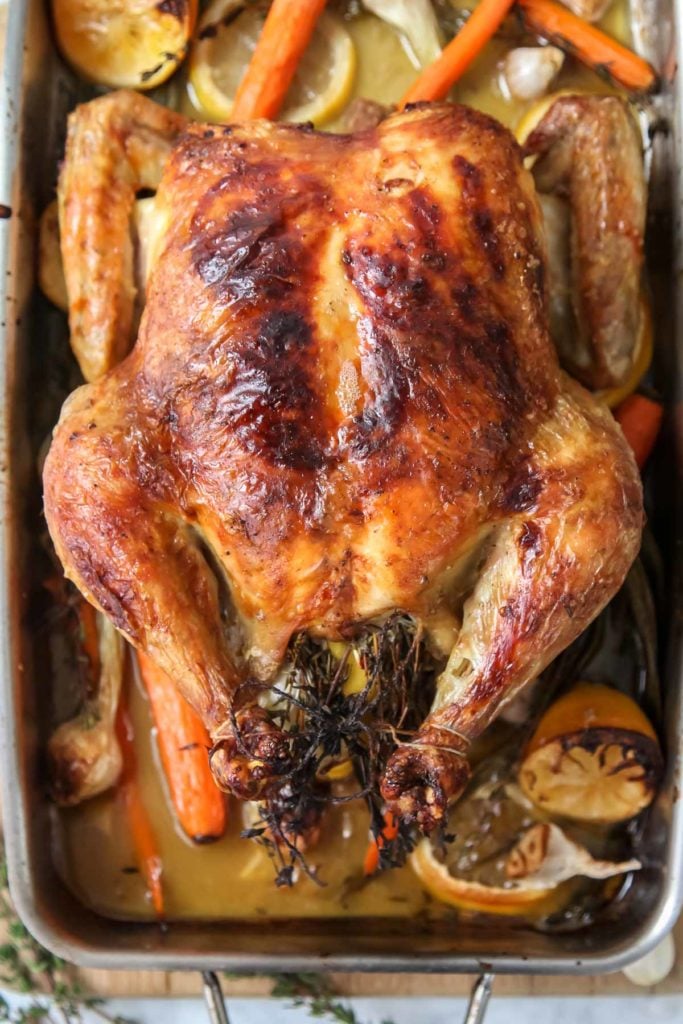
A whole roasted chicken is something every home cook should be able to master. This is my foolproof method for an irresistibly flavorful, juicy, crispy roast chicken that’s perfect for meal prep and weeknight dinners.
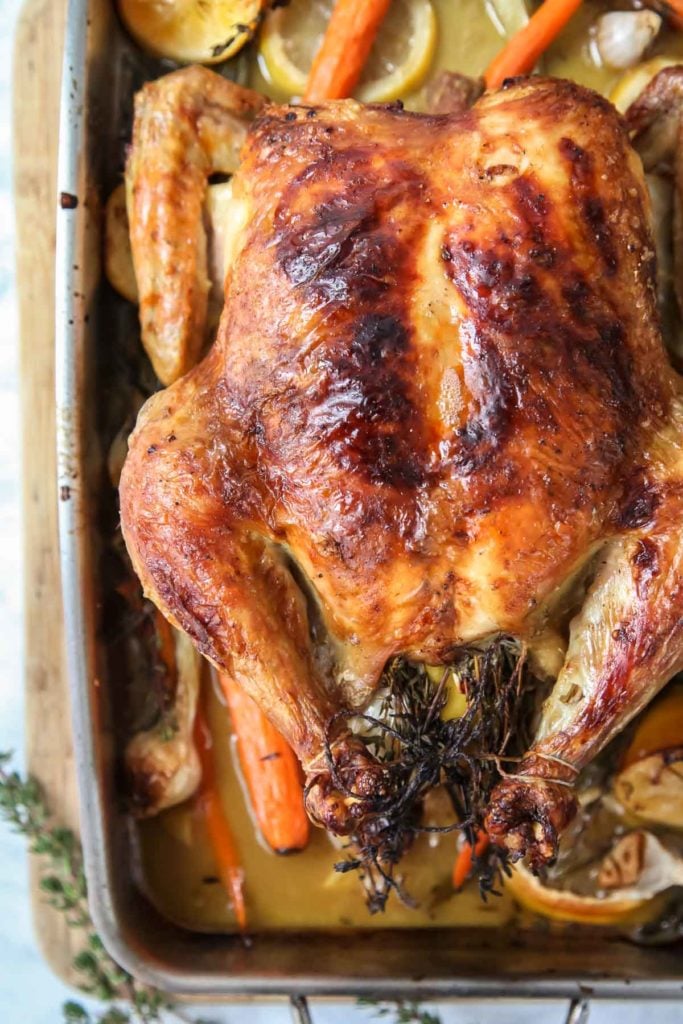
There’s nothing more comforting than the familiar scent of a chicken roasting away in the oven. The savory aroma of garlic and onion, lemon and herbs, mingling with schmaltzy chicken—it’s a thing of beauty.
A roast chicken done right never disappoints.
A whole roast chicken is something every home cook should be able to master, yet I’ll admit that it took me a while to do so. In the past, I attempted various roast chicken recipes, most of which turned out a bird that was either undercooked or cooked too long with dry, sinewy meat.
But after cooking many more chickens since, I figured out the secrets to making a truly great roast chicken. Don’t worry, I’m willing to share my secrets with you.
Why You’ll Love This Recipe
- This is a basic roast chicken recipe that can be served tonight for dinner and repurposed tomorrow to make chicken salad, soup, sandwiches, and more.
- Once you’ve mastered the basics of roasting a supremely crispy whole chicken, you can change things up with your favorite seasoning blends and veggies.
- Roasting a whole chicken creates a golden brown, crispy exterior and a moist and juicy interior.
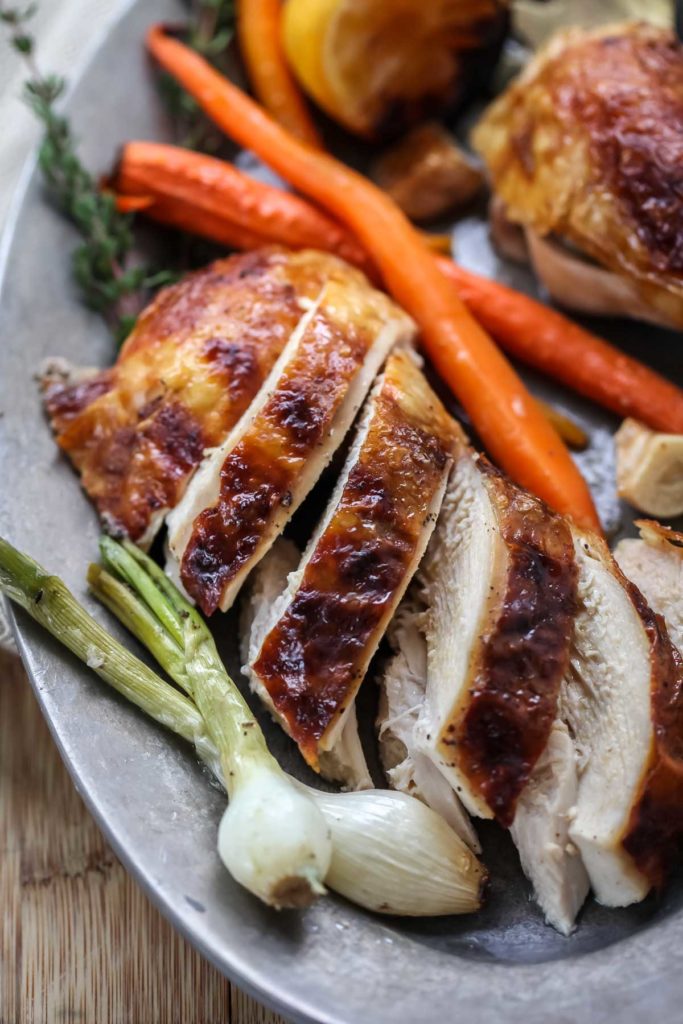
What’s in This Recipe?
The full recipe, with amounts, can be found in the recipe card below.
- Whole chicken — This recipe roasts a 4- to 5-pound chicken, which makes about 10 servings. Hello, planned leftovers!
- Kosher salt and freshly ground black pepper — If table salt is all you have on hand, use a little less. Iodized salt is more concentrated than kosher salt (also, because it has more iodine, using too much will result in a slightly bitter or metallic flavor).
- Aromatics — Carrots, garlic, onions, lemon, and fresh thyme flavor the bird from the inside-out and create steam for a crispy on the outside, juicy on the inside roasted chicken.
- Butter — Sometimes I skip adding some of the aromatics listed above, but I always slather the skin with butter or oil, season with salt and pepper, and roast with garlic and thyme.
Seasoning Ideas
Don’t think you have to limit yourself to the seasoning basics. Try different herbs and spices to create flavorful variations to give your clucker a unique flavor, like:
- Chopped fresh or dried oregano, thyme, rosemary, parsley, and tarragon
- Smoked paprika
- Truffle salt
- Coriander
- Garam masala
- Cumin
And while you’re at it, go ahead and switch up the veggies depending on what’s in season:
- Onion or shallots
- Scallions
- Garlic
- Celery
- Carrots
- Turnips
- Parsnips
How to Roast a Whole Chicken for Maximum Crispiness
- Take the chill off. Pull your chicken from the refrigerator 30 minutes before roasting to ensure a more even cooking time. Meanwhile, preheat your oven and position a rack in the lower third of the oven. (You don’t want the top of your bird burning!)
- Season generously. Most grocery store rotisserie chickens taste good because the basic chicken meat has been pumped with salt or other brining devices. I’m not a big fan of the Arnold Schwarzenegger “Pump You Up” method, but I do believe in generously seasoning the bird inside and out with a hearty dose of kosher salt and freshly ground black pepper.
- Add fat and get under its skin. You know the drill: Fat= flavor. To get a crispy skin on your roast chicken, slather the bird with a butter blend or olive oil. Both work equally well and will turn your bird into a bronzed Brazilian bombshell from the beaches of Rio de Janeiro with a crackin’ crispy crust.
Heidi’s Tip: Slather your bird with any of these flavored butters for even MORE flavor.
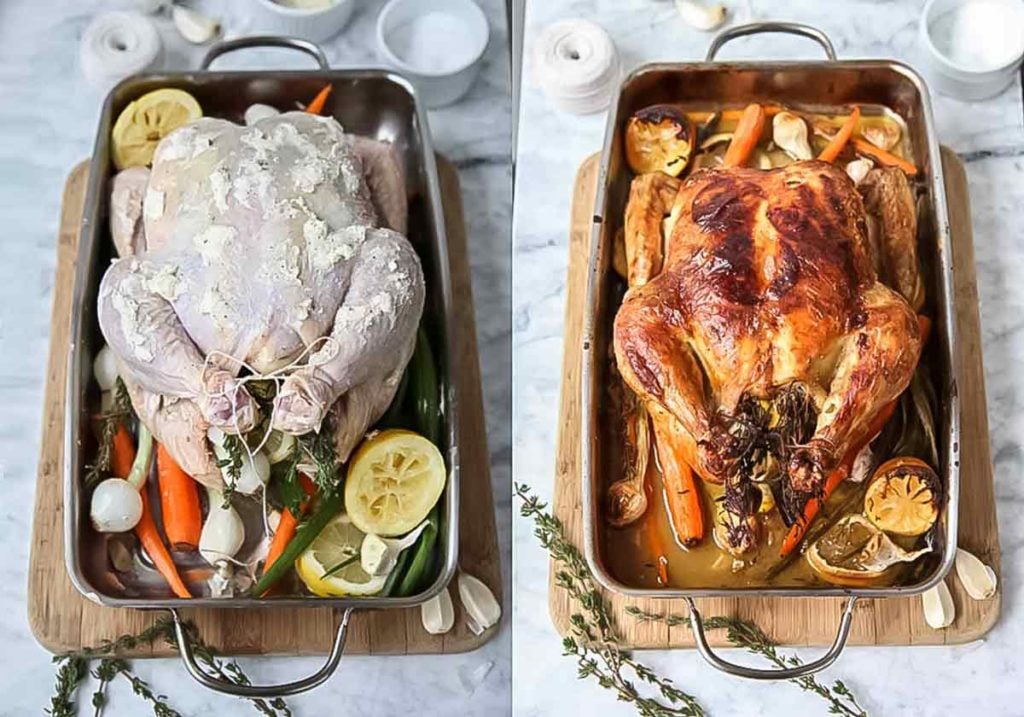
- Play with your veggies. Stuff your chicken with vegetables and fresh herbs to deliver a lovely flavor from within that permeates every juicy bite of the chicken meat.
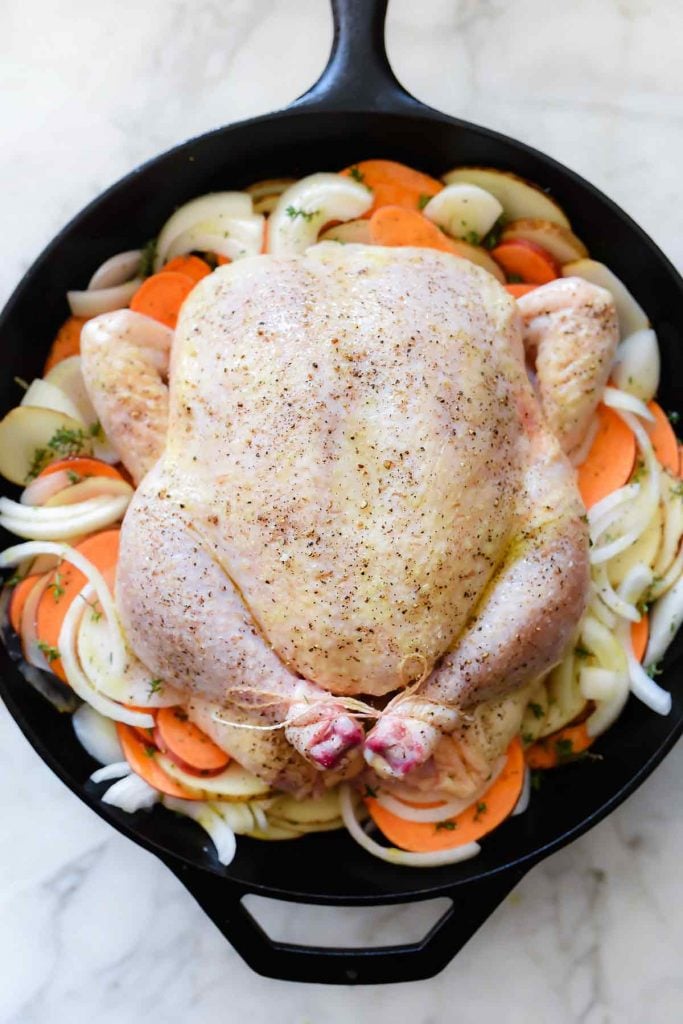
- Create a natural roasting surface on the bottom of the roasting pan. Scattered veggies placed under the bird not only keep the skin on the bottom of the bird from sticking to the pan but impart flavor throughout. They also create an amazing base for pan drippings. Use a variety of seasonal veggies to gear the taste to different flavors throughout the year.
Heidi’s Tip: Use a low-side roasting pan or rimmed baking sheet. Low sides give hot air more contact with the chicken so it roasts evenly all the way around.
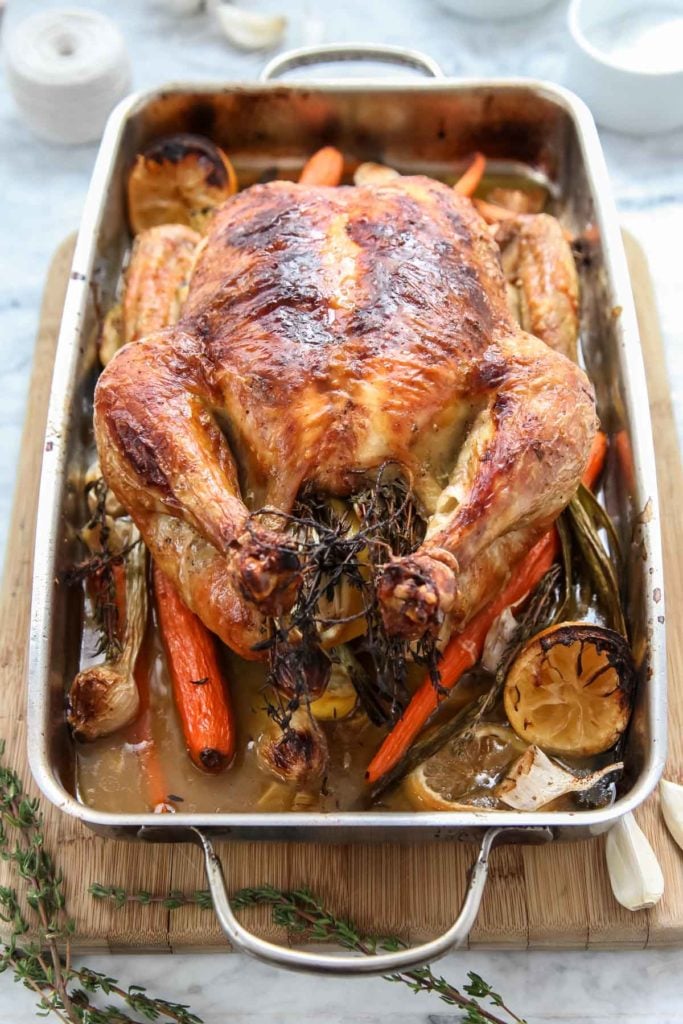
- Bake and baste. Roast the chicken at 425°F until an instant-read thermometer inserted into the inner thigh registers 155° to 160°F and the juices are running clear. Be sure to baste the bird with the pan juices about halfway through the roasting time and flip the pan around while you’re at it for a super crispy roast chicken.
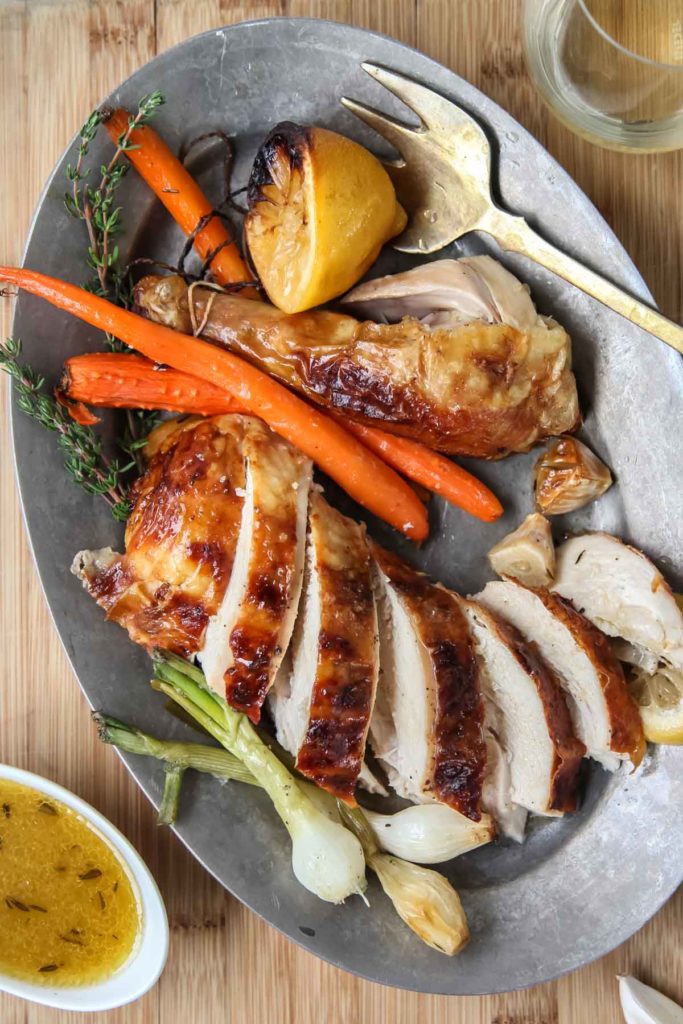
- Give it a rest. Give it 10 minutes to cool down before slicing and serving. This really seals in the juices and makes for a tender bite.
FAQs
Roast your chicken at 425°F. We’re roasting our chicken, not baking it—that’s why a high temperature will ensure crispy skin that’s juicy on the inside.
I don’t recommend covering your chicken unless it begins to brown too much.
Direct heat with the chicken is where you’ll get a crisp skin. Covering the chicken will create steam and soften the skin.
Plan on 15-18 minutes of cooking time per pound, then add 15 minutes, plus resting time.
For a 5-pound chicken, I plan on 75-90 minutes at 425ºF for a roast chicken to be done. However, the cook time for your specific bird will vary depending on how big it is and how hot your oven burns.
There are 3 ways I use to tell if a chicken is done, and I do each of them every time I roast chicken:
1. Use an instant-read thermometer inserted between the breast and thigh meat, avoiding the bone. This is my favorite food thermometer. The temperature of the chicken should read between 155°F to 160° F. Allow 10-15 minutes of resting time once you’ve pulled the chicken from the oven so the juices seal into the meat where the chicken will continue to cook as it rests, bringing the temperature up to the recommended 165°F internal temperature.
2. Check to see if the juices are running clear. I can usually tell when I pull my thermometer from the meat and the juices run out.
3. Wiggle the chicken leg. If it is loose and pliable, the chicken is likely done. As you cook more chickens, you’ll become better at using this method by touch.
What to Serve With Roast Chicken
- Casseroles — Heavenly Funeral Potatoes, Green Bean Casserole, Au Gratin Potatoes, Zucchini Casserole
- Veggies — Creamy Mashed Potatoes, Roasted Asparagus with Almonds, Roasted Potato Salad, Garlic Rosemary Smashed Potatoes
- Salads —Kale Salad with Parmesan and Pine Nuts, Avocado Greek Salad, Arugula Apple Salad, Frozen Cranberry Jello Salad
If you make this recipe, please let me know! Leave a ⭐️⭐️⭐️⭐️⭐️ rating on this recipe below and leave a comment, take a photo, and tag me on Instagram with #foodiecrusheats.
Simple Roast Chicken Recipe
Ingredients
- 4- to 5- pound whole chicken , at room temperature
- Kosher salt and freshly ground pepper
- 2 carrots , cut into 2-inch lengths
- 1 yellow, red, or bunch of Mexican onions , quartered
- 1 head garlic , cut in half
- 2 lemons , quartered
- 4 tablespoons unsalted butter , softened
- 1 bunch fresh thyme sprigs
Instructions
- Preheat the oven to 425° F and position a rack in the lower third of the oven.
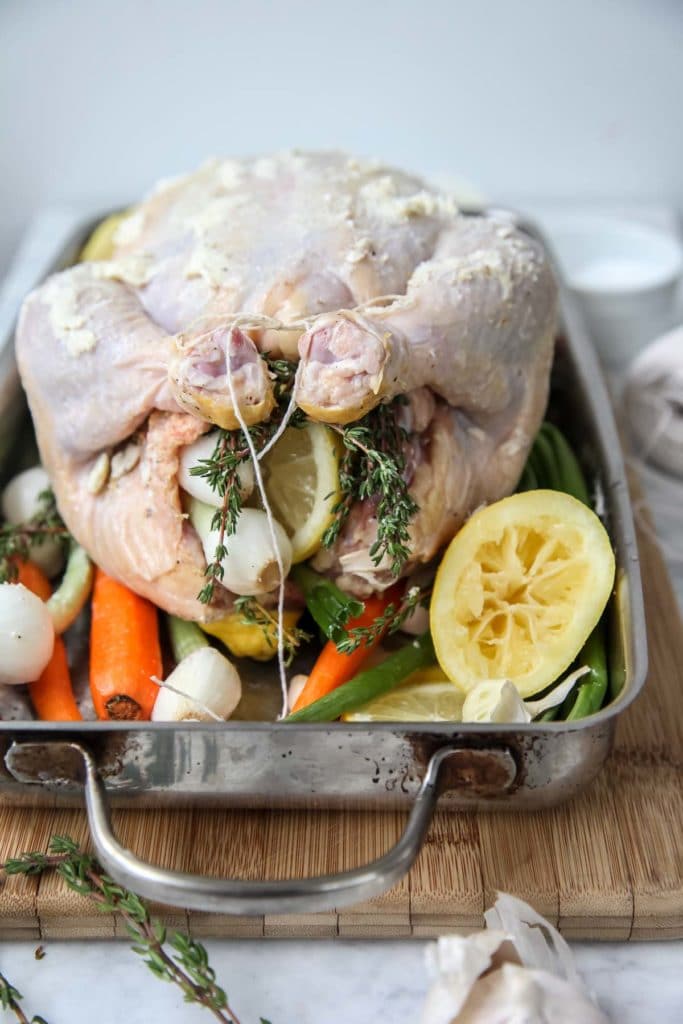
- Remove the giblets and the neck and pat the chicken dry inside and out. Generously season the inside of the cavity with salt and pepper. Gently work your fingers under the skin and rub half of the butter on the chicken breasts and the rest over the outside of the chicken. Season with more salt and pepper.
- Stuff the chicken with ½ head of garlic, ½ of the onion, a few carrots, ½ lemon and thyme sprigs. Truss the legs with cooking twine and tuck the wings under the bird.
- Arrange the remaining vegetables on the bottom of the roasting pan with some under the chicken to act as a rack. Set the chicken breast side up on top of the vegetables. Add a little bit of water, wine, or chicken broth if you like.
- Roast the chicken for 45 minutes. Baste with the pan juices and rotate the chicken in the oven. Cook for another 30-45 minutes, or when an instant-read thermometer inserted into the inner thigh registers 155° to 160° F and the juices of the chicken run clear when tested.
- Transfer the bird to a cutting board and tent with foil. Plan on adding an additional 10 minutes of time for the chicken to rest after it's been cooked. This helps seal in the juices for a tender bite every time. Remove the vegetables from the roasting pan and serve or discard. Serve the chicken hot, or refrigerate for up to 3 days.
Notes
Nutrition
Recipes for Using Up Leftover Roast Chicken
Roast a chicken at the beginning of the week and turn it into more meals all week long.
- Homemade Chicken Noodle Soup
- Chicken and Mango Rainbow Veggie Wraps
- Chinese Chicken Salad with Sesame Dressing
- Greek Yogurt Chicken Salad
- Game Day Chicken Nachos
- Dill Pickle Chicken Salad
- Mac and Cheese with Chicken and Broccoli
- Chipotle Chicken Taquitos
We send good emails. Subscribe to FoodieCrush and have each post plus exclusive content only for our subscribers delivered straight to your e-mail box.
Follow me on Instagram, Facebook, Pinterest, for more FoodieCrush inspiration.
As always, thank you for reading and supporting companies I partner with, which allows me to create more unique content and recipes for you. There may be affiliate links in this post of which I receive a small commission. All opinions are always my own.



Gail C.
Next time I roast a whole chicken, this is how I’m doing it! Thank you!
It is a good and easy way to get your chicken fix!
Janet
So delicious, and so full of flavor. The higher roasting temperature makes for a golden brown crispy skin. This is perfect for dish to take to a potluck or to serve one’s family. It makes one feel like a top rated chef!
So glad you enjoyed it Janet. Thanks for the comment and the 5-star rating.